Every hunter has a first hunt. Most of them don’t end with an animal on the ground, and that’s normal. Hunting is hard.
Some of the trouble is just bad luck. A lot of it comes from the same handful of mistakes, though. The good news is you can fix most of them before you ever leave the house.
1. Not scouting the area
Showing up on opening morning to a place you’ve never seen is tough. You don’t know where the animals feed, bed, or drink. You don’t know where the roads and trails go.
Go look before the season if you can. Walk the area. Look for tracks, droppings, and trails. Even looking at maps and satellite photos at home helps a lot. A hunting app like onX can show public and private land lines too.
2. Not knowing the rules for your hunt
Every state has its own rules, and they change. Seasons, legal hours, unit lines, what weapons you can use, and how to tag an animal are all set by your state.
Read the regulations for your state and your unit before you go. In Arizona, that’s azgfd.com. Check the current rules each year, even if you hunted the same spot last year.
3. Not practicing enough
Shooting off a bench at the range is not the same as shooting in the field. Out there you might be sitting, kneeling, or leaning on a tree. You might be out of breath from a climb.
- Make sure your rifle or bow is sighted in before the season.
- Check it again if it got bumped or rode a long way in the truck.
- Practice from the positions you’ll really use.
- Learn how far you can shoot well, and stay inside that distance.
4. Moving too much
Deer and elk spot movement fast. A new hunter often fidgets, checks a phone, or stands up to stretch at the wrong time.
Sit still. Move your eyes before your head. When you do need to move, do it slowly. Often the hunter who sits the longest sees the most.
5. Ignoring the wind
An animal’s nose is its best warning system. If the wind carries your smell to a deer, it’s gone, and you may never know it was there.
Check the wind often. Many hunters carry a small bottle of wind checker powder or just watch which way grass and dust blow. Try to keep the wind blowing from the animals toward you, not from you toward them.
6. Walking more than looking
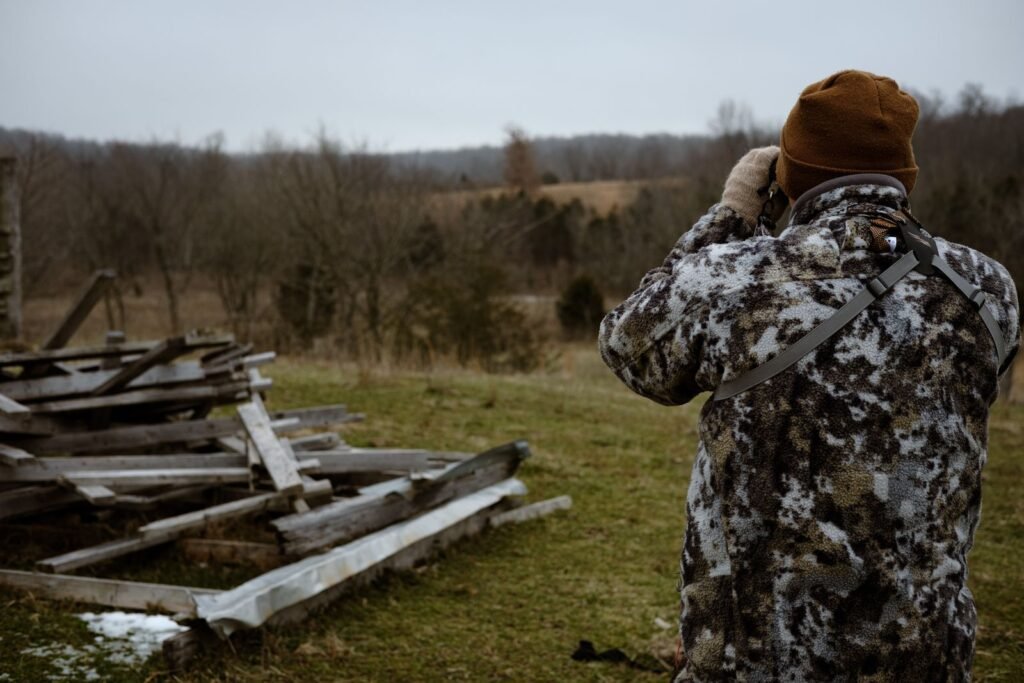
New hunters often walk and walk, hoping to bump into something. In open country like much of Arizona, hunters find more game by sitting on a high spot and glassing with binoculars for a long time. If you don’t have a good pair yet, read our guide to hunting binoculars.
7. Taking a bad shot
This one matters most. A rushed shot, a shot that’s too far, or a shot at an animal that’s moving or partly hidden can wound it without killing it. That’s the worst outcome there is.
Only shoot when:
- You’re sure what the animal is and that it’s legal to take.
- You know what’s behind it.
- It’s standing still and broadside or close to it.
- It’s inside the distance you’ve practiced.
If you’re not sure, don’t shoot. There will be another chance. Passing on a bad shot is part of hunting the right way.
8. Forgetting basic gun safety
Excitement makes people careless. Keep your muzzle pointed in a safe direction. Keep your finger off the trigger until you’re ready to shoot. Unload before you climb a fence, cross a creek, or get in the truck. Never point a gun at anything you don’t want to shoot, and that includes using your scope to look at something you can’t identify.
9. No plan for the meat
Getting an animal down is only half the job. In warm weather, meat can spoil fast if you don’t get it cleaned and cooled.
Bring a sharp knife, game bags, gloves, and a way to haul the meat out. Learn the steps ahead of time with our post on how to field dress a deer.
10. Not telling anyone where you’re going
Phones often don’t work in hunting country. Before you go, tell someone where you’ll be and when you’ll be back. Carry water, a light, a first aid kit, and a way to find your way out. A GPS or offline map on your phone helps a lot.
11. Giving up too early
Lots of new hunters head back to camp by 9 AM. Animals don’t always follow a schedule, especially when other hunters push them around. Stay out longer than you want to. Pack a lunch and a warm layer so you can.
The big picture
You won’t do everything right on your first hunt. Nobody does. Pick a few of these to work on, and you’ll be ahead of most first-timers. Every trip teaches you something, even the ones where you come home with just a tag in your pocket.
Next step: If you’re still getting ready, start with our first deer hunt gear checklist, or read how to start hunting from the beginning.